Wolt delivery partner sign-ups take about 15 minutes. Activation can take two weeks. That gap trips up almost everyone who expects to start earning the same day they apply.
Most of the registration is paperwork: ID scans, vehicle proof, bank details. The slow part is the background check and onboarding queue, which varies wildly depending on your city’s demand for new couriers.


This guide is for someone in Europe or the Middle East who wants gig income on a bike or scooter and needs to know exactly what the process looks like before committing a single afternoon to it.
What a Wolt Courier Does and Doesn’t Do
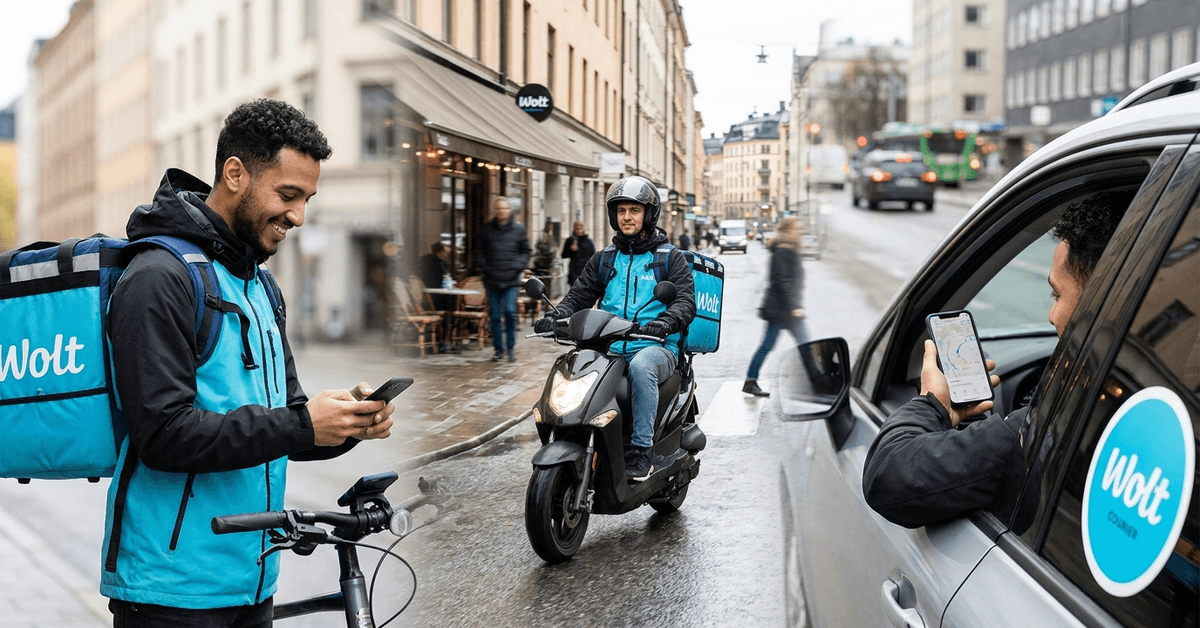
A Wolt courier picks up orders from restaurants and retail stores, then delivers them to customers using the Wolt Partner app. The work is order-by-order, not shift-based in the traditional sense.
You claim time slots through the app. During those slots, orders come in as push notifications with pickup locations, drop-off addresses, and estimated pay per delivery. You accept or skip.
The Slot System Changes Everything
Slots are time blocks you reserve in advance. Popular evening and weekend slots fill fast in busy cities like Helsinki, Berlin, or Tel Aviv. If you treat Wolt like a casual thing you’ll open when you feel like it, you’ll find empty calendars.
I think the slot reservation system is the single biggest factor Wolt couriers underestimate, because it means your earnings depend on planning a week ahead, not just showing up.
Delivery Methods Differ by City
Wolt allows deliveries by bicycle, e-scooter, moped, or car. Not every city supports every mode. Some cities restrict car deliveries to grocery or large-item orders only.
Bike couriers tend to earn less per delivery but save on fuel and insurance costs. Car couriers cover longer distances and handle bigger orders but burn through expenses faster.
Wolt Delivery Partner Registration: The Full Process
The sign-up happens on Wolt’s partner website or through the app. Four stages sit between you and your first delivery.
Eligibility Checks Come First
You need to be at least 18 years old in most markets. A legal right to work in your country is mandatory. Wolt verifies this through document uploads during registration.
The vehicle requirement depends on your chosen delivery mode. Bike couriers need less documentation. Car and moped couriers must upload a valid driver’s license and proof of insurance.
Online Registration Takes 10 to 15 Minutes
The form asks for personal details, ID scans, vehicle documentation, and bank account information for payouts. Double-check every upload before submitting. Blurry ID photos are the most common reason for delays.
Onboarding Is Mostly Online Now
Wolt runs onboarding sessions that cover app usage, safety procedures, and delivery expectations. These are typically online video modules in 2026, though a few cities still do in-person orientations.
If you’ve done gig delivery work on another platform, the content will feel familiar. City-specific rules on parking, restricted zones, and contactless delivery are the parts worth paying attention to.
Profile Activation and Your First Slot
After onboarding approval, Wolt sends an activation confirmation through the app. This unlocks the task dashboard and slot scheduling tools.
Grab your first slots immediately. Waiting even a day in a competitive city means losing prime evening windows to faster couriers.
How Wolt Pay Works and Where It Gets Thin
Wolt pays a base fee per delivery plus distance-based additions. Tips go directly to the courier. Bonus incentives appear during high-demand periods like Friday dinners, rainy days, and holidays.
The exact per-delivery rate varies by country and city. Transparency on base rates is decent compared to some competitors, but Wolt does not publish a universal rate card.
Off-Peak Hours Are the Weak Spot
Lunch rushes and dinner windows pay reasonably well in most cities. The dead hours between 2 PM and 5 PM can produce almost zero orders in smaller markets.
I would avoid planning full-day shifts on Wolt unless you’re in a top-10 city by order volume, because the off-peak gaps eat into your hourly average fast enough to make a six-hour day feel like a four-hour payday.
Expenses You Need to Track
Since Wolt classifies couriers as self-employed contractors, every cost comes out of your pocket:
- Phone data plan for constant app and GPS usage
- Vehicle maintenance, fuel, or e-bike charging costs
- Third-party liability insurance (required in most markets for motorized vehicles)
- Rain gear, phone mounts, and insulated delivery bags
These costs don’t appear in Wolt’s earnings dashboard. Your real hourly rate is whatever the app shows minus all of the above.
Wolt vs. Uber Eats vs. Deliveroo: Which Platform Pays More?
Comparing platforms matters less than comparing your specific city’s demand on each one. A platform with higher base rates means nothing if it sends you two orders per hour instead of five.
| Feature | Wolt | Uber Eats | Deliveroo |
|---|---|---|---|
| Delivery modes | Bike, scooter, moped, car | Bike, scooter, car | Bike, scooter, moped, car |
| Tip transparency | Tips shown after delivery | Tips shown after 1 hour | Tips shown after delivery |
| Scheduling | Slot reservation system | Open availability | Slot-based in most cities |
| Geographic reach | Europe, Middle East, Japan | Global (50+ countries) | UK, EU, select Asian markets |
Wolt’s slot system gives more predictable hours but less spontaneity. Uber Eats lets you go online anytime, which sounds better until you realize everyone else does the same thing during peak hours.
Running Two Platforms at Once
Some couriers run Wolt and Uber Eats simultaneously to fill dead hours. This is technically allowed in most markets, but check your local Wolt partner agreement.
Juggling two apps while cycling through traffic is also a safety question worth thinking about honestly.
Tax and Insurance Mistakes New Couriers Make
Wolt couriers are self-employed in nearly every market. This means no employer withholds taxes, no paid sick days, and no automatic pension contributions.
Forgetting Quarterly Tax Obligations
Many countries require self-employed workers to file and pay taxes quarterly, not annually.
Missing a quarterly deadline can trigger penalties that wipe out a month of delivery earnings. Check your national tax authority’s website within your first week of active deliveries.
Skipping Liability Insurance
Bicycle couriers often assume they don’t need insurance. A collision with a pedestrian while carrying a delivery can create personal liability that Wolt’s platform terms do not cover.
Basic third-party liability policies for gig couriers cost relatively little in most European markets. Skipping coverage to save money is a gamble with bad math.
Questions People Ask About Becoming a Wolt Delivery Partner
A few things come up repeatedly for people still on the fence about signing up.
- Q: Can you reject Wolt deliveries without consequences?
You can skip individual orders. Rejecting too many during a reserved slot may lower your reliability score, which affects future slot availability. Occasional skips are fine. Patterns are not. - Q: Does Wolt provide delivery bags or equipment?
Some cities offer a starter kit with a Wolt-branded bag. Others require you to purchase your own insulated bag. The app or your local onboarding session will specify what your city provides. - Q: How long does Wolt activation take after applying?
Anywhere from 3 days to 2 weeks depending on your city’s verification backlog. Peak hiring seasons (summer, holiday periods) tend to slow things down. Submitting clean, legible documents speeds it up. - Q: Is Wolt courier work viable as a full-time income?
It depends entirely on your city’s order volume and your willingness to work peak slots consistently. Full-time couriers in high-demand cities report workable monthly totals, but off-peak markets make full-time reliance risky without a second income source. - Q: Do Wolt couriers get any benefits?
Wolt has introduced accident insurance in some markets, but traditional employment benefits like health coverage or paid leave are not part of the contractor model. Check your country’s specific Wolt partner terms for current coverage details.
Conclusion
The Wolt delivery partner model rewards couriers who plan slots early and track expenses honestly. Your city’s order density matters more than any platform’s advertised rates.
Gig delivery income is real, but treating it like a business changes the numbers completely. Start with a week of peak-hour-only shifts and let the data tell you whether to expand.