Just Eat delivery driver pay starts at a per-delivery fee, and in most UK cities during 2026, that lands somewhere around £4 to £6 per drop. Sounds straightforward until you factor in dead time between orders.
Most people fixate on the signup process. The part that trips up new couriers is what happens during the first two weeks: slow order flow, unfamiliar app quirks, and zero momentum.


This guide is for someone considering gig delivery as a second income stream, maybe a student or a part-timer who needs £200 to £500 a week without a fixed rota.
What You Need to Sign Up as a Just Eat Courier
Just Eat requires applicants to be at least 18 years old, hold the legal right to work in their country, and pass an identity verification. A background check runs automatically during the application.
You can deliver on a bicycle, e-bike, scooter, or car. Each vehicle type comes with different document requirements.
Vehicles, Licences, and Insurance
Car and scooter couriers need a valid driving licence and commercial vehicle insurance. Standard personal insurance policies do not cover paid delivery work, and Just Eat can deactivate your account if your coverage lapses.
Bicycle couriers skip the insurance requirement in most regions. But some cities now recommend public liability cover even for cyclists.
Phone and Gear You’ll Need
The Just Eat courier app runs on Android and iOS. Older phones with weak GPS or short battery life cause missed pings and failed navigations mid-shift.
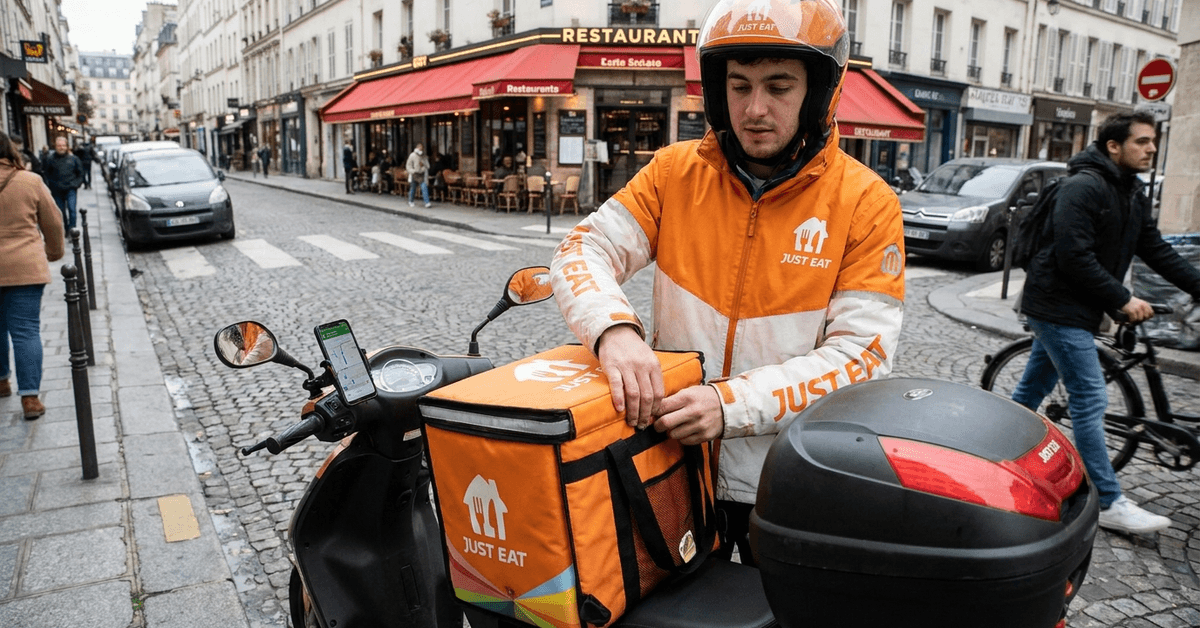
A branded thermal delivery bag is usually provided or required at signup. Helmets and reflective clothing are mandatory for scooter and motorbike couriers under UK road law.
How the Just Eat Application Process Works
Registration happens entirely online through the Just Eat courier portal. You enter personal details, work eligibility info, and your vehicle type. The system sometimes asks for photos of your vehicle and documents.
Franchise Partners vs Direct Signup
Just Eat operates differently depending on your city. Some areas use third-party fleet partners like Stuart or other local operators. Your application might redirect to one of these companies, and they handle onboarding, scheduling, and payments separately.
I would check the courier portal for your specific postcode before applying, because the partner model changes your pay structure, shift access, and even your employment status.
Onboarding After Approval
Approval timelines vary. Some couriers report getting activated within 48 hours. Others wait up to two weeks for background checks to clear.
Once approved, you get access to short training modules inside the app. These cover order acceptance, navigation, and how to handle customer issues like missing items or wrong addresses.
Just Eat Delivery Driver Pay: How Much You Can Earn
Just Eat pays a fee per completed delivery, not a fixed hourly wage for most courier positions. The exact amount depends on distance, time of day, and local demand.
During peak hours (typically 12:00 to 14:00 and 18:00 to 21:00), delivery fees can bump up with surge pricing. Quiet mid-afternoon shifts might leave you waiting 20 minutes between orders.
Tips and Bonus Programmes
Customers can tip through the app or hand you cash. Tips go directly to you and are not deducted from your delivery fee.
Just Eat occasionally runs bonus incentive campaigns: complete a set number of deliveries during a promotional window and earn an extra flat payment. These promotions appear inside the app and tend to cluster around holidays, sporting events, and bad weather days.
Weekly vs Biweekly Payouts
Payment frequency depends on whether you work as a direct courier or through a fleet partner. Direct couriers typically receive weekly payouts via bank transfer.
Fleet partner couriers follow that partner’s payroll cycle, which might be biweekly. I think the fleet partner model gets recommended too often as equivalent to direct signup.
The biweekly pay cycle alone can squeeze a new courier who needs cash flow in the first month, and fleet partners sometimes take a cut of delivery fees that direct couriers keep in full. If you have the option, direct signup through Just Eat puts more money in your pocket faster.
Tax and Legal Stuff Most New Couriers Forget
Most Just Eat couriers in the UK are classified as self-employed independent contractors. That means HMRC expects you to register for Self Assessment and file a tax return each year.
Setting Aside Tax Money
A common mistake: spending everything you earn and getting hit with a tax bill in January.
Setting aside 25% to 30% of your weekly earnings into a separate account covers income tax and National Insurance contributions for most couriers in the basic rate band.
You can claim allowable expenses against your delivery income. Fuel, phone bills (the portion used for work), maintenance costs, and the thermal bag all count.
Insurance Gaps to Watch
If you deliver by car, your personal motor insurance almost certainly excludes hire and reward activity.
A policy that covers commuting does not cover paid deliveries. Specialist courier insurance from providers like Zego or Marshmallow covers you per-hour or per-month.
Cycling couriers have fewer requirements, but personal accident insurance runs around £5 to £10 per month and covers injury-related income loss.
Earning More on Just Eat: What Works and What Doesn’t
Working smarter on Just Eat comes down to three things: when you work, where you position yourself, and how fast you move between drops.
Timing Your Shifts Around Demand
Lunch and dinner rushes are obvious. The overlooked window is Friday and Saturday evenings between 19:00 and 22:00, when order volume spikes and many casual couriers log off early.
Monitoring local events helps too. A football match at a nearby stadium or a concert can push delivery requests up for restaurants within a 3-mile radius.
Route Knowledge Beats GPS
GPS apps route you the same way as every other driver. Couriers who know one-way streets, pedestrian shortcuts, and building entry points finish deliveries faster and get back into the queue sooner.
Could learning five key shortcuts in your zone add two extra deliveries per shift? Probably. Over a week, that compounds.
Ratings and Their Hidden Effect
Customer ratings on Just Eat can influence your access to peak-hour shifts and bonus eligibility. A courier sitting at 4.8 stars may see better shift options than one at 4.3.
Simple things move the needle: a quick text when you arrive, keeping food upright in the bag, and not ringing the doorbell at 22:30 unless asked.
The practical details that separate a £300 week from a £500 week on Just Eat often come down to these small habits rather than raw hours logged.
- Track your mileage daily using an app like Stride or Mile IQ for tax deductions
- Charge your phone to 100% before every shift, or carry a power bank
- Check your vehicle insurance covers hire-and-reward work before your first delivery
- Register for Self Assessment with HMRC within your first month of courier work
- Screenshot your weekly earnings inside the app for your own records
| Factor | Direct Just Eat Courier | Fleet Partner Courier |
|---|---|---|
| Pay Cycle | Weekly | Biweekly (varies) |
| Fee Structure | Per delivery, set by Just Eat | Per delivery, partner may take a cut |
| Shift Access | App-based, self-scheduled | May involve assigned windows |
| Onboarding | Just Eat app training | Partner’s own process |
Direct couriers keep more control over pay timing and fee transparency.
Can Just Eat Lead to Something Bigger?
Some couriers use Just Eat as a bridge. The gig itself teaches you local logistics, app-based work, and time management under pressure.
Stacking Platforms for More Orders
Experienced couriers often sign up for Deliveroo or Uber Eats alongside Just Eat. Running two apps simultaneously fills dead time between orders on any single platform.
The risk is juggling two live orders from different apps. Do that poorly and your ratings drop on both.
Long-Term Courier Perks
Couriers with high ratings and consistent availability sometimes get priority shift access and early notification of bonus campaigns. These perks are not advertised publicly but tend to appear after several months of steady activity.
Questions People Ask About Just Eat Delivery Driver Jobs
These are the questions I see come up repeatedly in courier forums and Reddit threads about Just Eat.
- Q: Can you do Just Eat deliveries on a bicycle without insurance?
Yes, in most UK regions bicycle couriers are not required to carry vehicle insurance. Personal accident cover is optional but worth considering if delivery income is a big part of your budget. Check your local council for any area-specific requirements. - Q: How long does Just Eat driver approval take?
Most applicants hear back within 48 hours to two weeks. Background checks are the usual delay. Having all documents uploaded cleanly during registration speeds things up. - Q: Do Just Eat drivers get to keep 100% of tips?
Tips added through the app or given in cash go entirely to you. Just Eat does not deduct a percentage from tips. Cash tips, though, are still technically taxable self-employment income. - Q: Can you work for Just Eat and Uber Eats at the same time?
Nothing in Just Eat’s courier terms prevents you from working on other platforms simultaneously. Many couriers run two or three delivery apps to fill gaps. Just avoid accepting overlapping orders that delay either delivery. - Q: Is there a minimum number of hours you have to work on Just Eat?
No minimum hours exist for self-employed Just Eat couriers. You log in when you want and log off when you are done. Fleet partner arrangements might have soft minimums, so read the partner’s terms carefully.
Conclusion
Becoming a Just Eat delivery driver takes less than a week for most applicants who have their documents ready. The real earning curve starts after your first 50 deliveries, when you learn your zone’s rhythm.
Tax prep and insurance are the two things that catch new couriers off guard months later. Treat this like a small business from day one, and the numbers start working in your favour.