DoorDash advertises roughly $23 per active hour for its drivers. That number is technically real. But “active hour” only counts the minutes between accepting an order and dropping it off, not the waiting, the repositioning, or the drive back to a hot zone.
Independent earnings data from Gridwise and Everlance puts the real gross closer to $15 to $22 per hour for a Dasher who’s clocked in and working a full shift. After gas, maintenance, and depreciation, net take-home sits around $10 to $14 an hour.



This article is for the person weighing DoorDash against a part-time hourly job, not someone who’s already decided.
What Does It Take to Sign Up as a DoorDash Driver?
DoorDash requires applicants to be at least 18 years old in most U.S. states, with a valid driver’s license, auto insurance, a Social Security number, and a smartphone running the Dasher app.
Some states set the minimum age at 19, including Arizona, Colorado, Florida, Georgia, New Jersey, and Texas. California requires drivers to be 21.
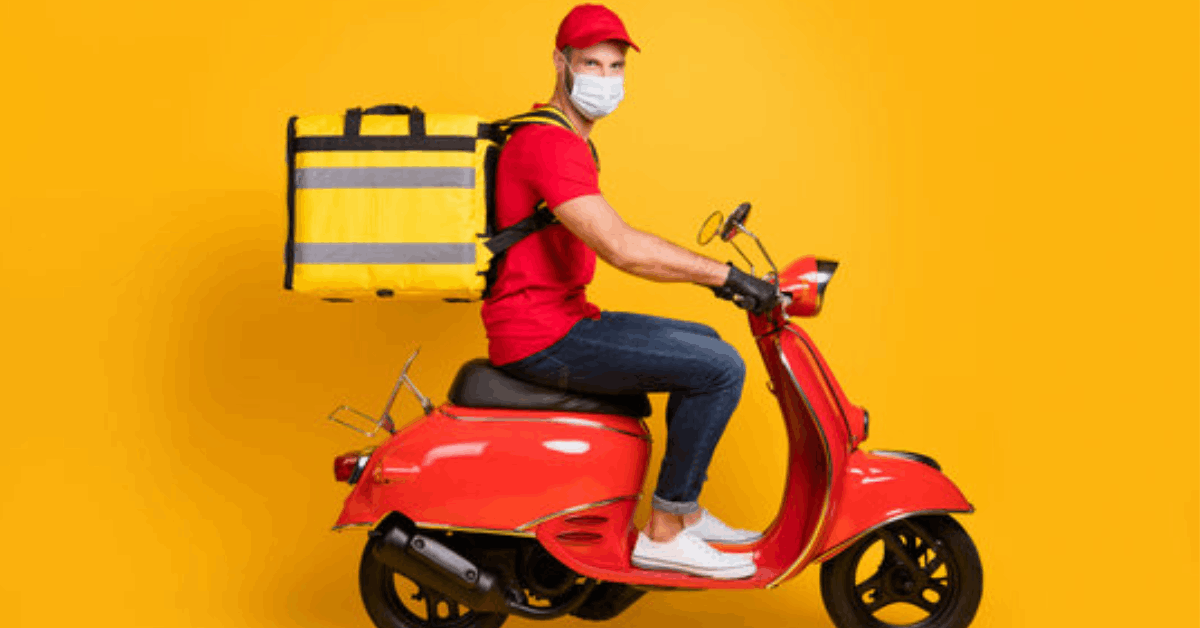
The vehicle rules are loose. DoorDash has no restrictions on the age, make, or model of your car. A 2005 Civic and a 2026 Tesla get the same treatment, as long as registration and insurance are current.
Do You Need a Car to DoorDash?
No. Bike, e-bike, and scooter delivery is available in select urban markets like NYC, San Francisco, DC, and Chicago. Bike-only Dashers can use a government-issued ID instead of a driver’s license.
That said, most suburban and rural zones are car-only. If you live outside a dense metro area, plan on using your own vehicle.
The Background Check Process
DoorDash uses Checkr to run a motor vehicle record and criminal background check once you submit your application. Turnaround is typically five to seven business days. Sometimes it takes up to two weeks if DMV or county record delays are involved.
A clean record isn’t strictly required. DoorDash evaluates certain offenses on a case-by-case basis, and older, non-violent offenses often don’t disqualify applicants. A suspended or expired license, though, will.
How to Apply for DoorDash Step by Step
The application takes about 10 minutes. You’ll go through DoorDash’s Dasher signup page and enter your name, email, phone number, and zip code.
After that, upload your driver’s license (front and back), add your vehicle details (make, model, color), and provide your insurance information. DoorDash also asks for a selfie to match against your ID photo.
Consent and Waiting
You authorize the Checkr background check with your Social Security number. Then you wait. Once cleared, DoorDash sends a link to download the Dasher app.
Some markets include a short online orientation video. Others let you start accepting orders immediately after the check clears.
The Activation Kit
DoorDash mails an activation kit with a thermal hot bag and a DoorDash Red Card, a prepaid card for paying at restaurants that haven’t integrated digital payments. Some cities offer local pickup spots instead of mailing it.
You can start dashing before the kit arrives. But the Red Card is needed for certain orders, so you’ll miss some deliveries without it.
How Much Do DoorDash Drivers Earn in 2026?
DoorDash pay combines a base rate of $2 to $10 per delivery, 100% of customer tips, and occasional Peak Pay bonuses of $1 to $5 per order during busy windows. Tips make up 40 to 60 percent of most Dashers’ total earnings.
The numbers break down differently by city. Here’s a snapshot:
| City | Avg. Gross Hourly | Avg. Weekly (Full-Time) | Peak Pay Range |
|---|---|---|---|
| New York City | $17 – $30 | $600 – $1,200 | +$2 – $5/delivery |
| Los Angeles | $14 – $22 | $450 – $900 | +$1 – $3/delivery |
| Chicago | $13 – $21 | $420 – $850 | +$1 – $3/delivery |
| Houston | $13 – $20 | $400 – $800 | +$1 – $2/delivery |
| Phoenix | $12 – $19 | $380 – $760 | +$1 – $2/delivery |
Those are gross numbers. Your net depends entirely on vehicle costs and how you handle taxes.
Why “Active Hour” Pay Is Misleading
DoorDash’s $23/hour figure counts only active delivery time. Independent 2026 analyses land at $15 to $22 gross per hour for a Dasher who is genuinely working the full shift.
The difference is the dead time: sitting in a parking lot waiting for a ping, driving to a restaurant with no guaranteed order after.
I would not compare DoorDash’s marketed hourly rate to a W-2 job’s hourly rate. A W-2 job at $17/hour covers your employer’s share of Social Security and Medicare (7.65%), gives you unemployment insurance, and doesn’t eat your car.
DoorDash’s $17/hour gross carries a 15.3% self-employment tax before income tax even starts.
DoorDash Taxes: The Part That Eats Your Earnings
DoorDash classifies drivers as 1099 independent contractors. No taxes are withheld from your pay. You owe self-employment tax (15.3%) plus federal and state income tax on your net earnings.
Most DoorDash drivers pay 25 to 35 percent of their net earnings in combined taxes. That includes the SE tax, federal income tax (10 to 22% for most drivers), and state income tax.
Mileage Deduction: Track It or Lose It
Mileage is the largest deduction available to Dashers, and the one most new drivers ignore for the first three months. The 2026 IRS standard mileage rate got complicated this year.
Per IRS Notice 2026-10 and Announcement 2026-11, the rate is 72.5 cents per mile for miles driven January 1 through June 30, and 76 cents per mile from July 1 onward.
A driver logging 15,000 business miles across the year could claim over $11,000 in deductions. Skip the tracking, and that money just disappears. Other deductible expenses worth logging:
- Phone and data plan (business-use percentage only)
- Hot bags and insulated carriers purchased out of pocket
- Parking fees and tolls paid during deliveries
- Self-employed health insurance premiums if you qualify
- Solo 401(k) or SEP IRA contributions (yes, gig workers get retirement deductions)
Should You Chase Top Dasher Status?
I think chasing Top Dasher status is a bad trade for most drivers. The program requires a 4.7+ customer rating, a 70% acceptance rate, 100+ deliveries in the past month, and a 95%+ completion rate.
That 70% acceptance rate is the problem. It means you’d accept $3 and $4 orders just to maintain your percentage.
My take: a driver earning $18/hour who declines low-value orders will out-earn a Top Dasher who accepts everything at $14/hour gross, based on the math in Gridwise’s 2026 driver earnings analysis.
Common Mistakes New DoorDash Drivers Make
Rookies tend to repeat the same errors. Knowing them early saves real money.
- Not tracking mileage from day one. Every business mile driven is deductible. Once a week is too late to reconstruct your route history.
- Accepting every order. A $3.50 order going 8 miles loses money after gas. Set a personal minimum. Many experienced Dashers use $6 per delivery and $1.50 per mile as a floor.
- Ignoring quarterly estimated tax payments. The IRS expects self-employed earners to pay quarterly. Miss the deadlines (April 15, June 15, September 15, January 15), and you’ll owe penalties in April.
The Phone Charger Thing Is Not a Joke
Running the Dasher app, Google Maps, and cell data at the same time drains a phone battery fast. A dead phone at 7 PM on a Friday means you’re done for the night during the highest-paying window of the week. Keep a car charger plugged in. Every shift.
Questions People Ask About Becoming a DoorDash Driver
These are the questions that come up most often for people still on the fence.
- Q: Can you DoorDash with a suspended or expired license?
No. DoorDash’s background check flags suspended and expired licenses as automatic disqualifiers. Renew or reinstate before applying, or apply for bike delivery with a government ID in eligible metro areas. - Q: How long does DoorDash approval take?
The application itself takes about 10 minutes. The Checkr background check clears in five to seven business days for most applicants, though DMV backlogs can stretch it to two weeks. - Q: Do DoorDash drivers get any insurance from the company?
DoorDash carries a commercial auto policy that applies while you’re on an active delivery. It does not cover you while you’re waiting for orders or driving to a restaurant. Your personal auto insurance is your primary coverage. - Q: Is DoorDash better than Uber Eats for pay?
It depends on your city. Gridwise Analytics 2026 data shows Uber Eats averaging $24.68/hour gross versus DoorDash’s $18.93/hour in the same sample. But DoorDash holds roughly 67% U.S. market share, which means more consistent order volume in most areas. Running both apps simultaneously is the most common strategy among full-time gig drivers. - Q: Can you do DoorDash part-time and still make it worth the hassle?
Dashing 10 to 15 hours a week during Friday and Saturday dinner rushes can gross $200 to $400 weekly in most mid-size markets. After expenses and taxes, that drops to roughly $130 to $260. Whether that’s worth it depends on your vehicle costs and what you’d earn in those hours elsewhere.
Conclusion
DoorDash is one of the easiest gig platforms to join, and the signup process takes less time than most job applications. The earnings gap between the marketed rate and your actual take-home pay is real, and it widens if you skip mileage tracking.
Treat it like a small business, not a casual app, and the math can still work in your favor. The drivers who profit most are the ones who say no to bad orders and yes to a mileage log.