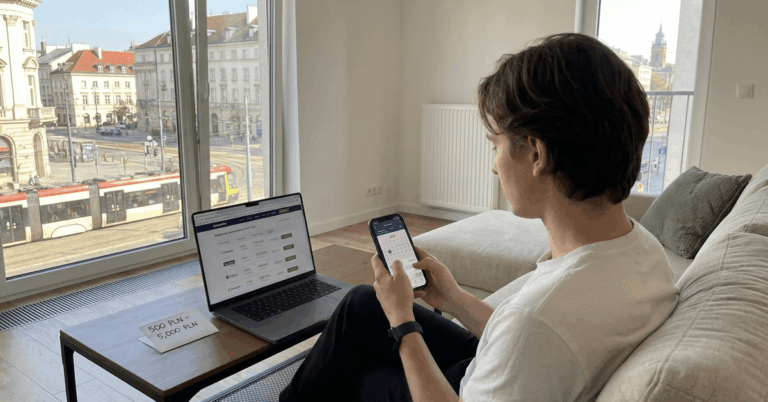
A pożyczka na dowód (ID loan) in Poland can put between 500 PLN and 7,000 PLN in a new borrower’s account the same day. That number matters because it sets the ceiling for most first-time applicants at non-bank lenders, even when the ads scream “up to 20,000 PLN.”
The catch sits in two words every Polish loan ad repeats: bez zaświadczeń (no certificates). No certificates about income does not mean no verification at all. Lenders still pull your BIK and KRD records, and they still run a 1-grosz verification transfer from your personal bank account.


This article is for people on umowa zlecenie (contract-of-mandate) or self-employment who struggle to produce a standard employer certificate but need short-term cash in 2026.
How a Polish ID Loan Application Works in 2026
The process takes roughly 15 minutes on a phone screen. But those 15 minutes contain a few steps that most borrowers skim past without thinking.
The 1-Grosz Verification Transfer
Every legitimate non-bank lender in Poland asks for a przelew weryfikacyjny: a symbolic 0.01 PLN transfer from your personal bank account.
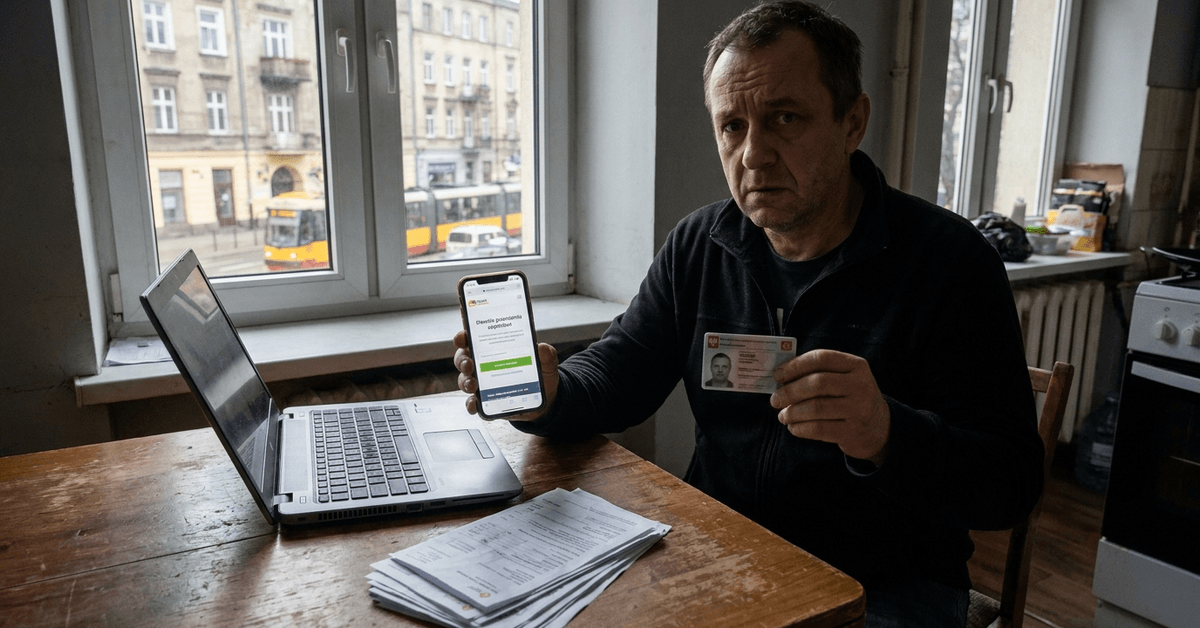
This transfer does two things simultaneously. It confirms your name matches the account holder, and it gives the lender your bank account number for the payout.
I think the 1-grosz transfer deserves more attention than it gets, especially after the SuperGrosz data breach in late 2025 exposed PESEL numbers and banking details of thousands of borrowers.
That breach triggered a response from CSIRT KNF and CSIRT NASK, and Polish authorities began developing an online tool to let citizens check if their data was compromised.
BIK and KRD Checks Still Happen
The “no documents” label does not mean “no credit check.” Lenders query BIK (Biuro Informacji Kredytowej) and KRD (Krajowy Rejestr Długów) to see active debts and missed payments.
Some smaller lenders skip BIK and check only KRD or BIG, but at least one registry gets pulled on every application processed by a company registered with KNF.
What “Decision in 15 Minutes” Looks Like
The system is automated. An algorithm scores your application based on registry data, your declared income source, and the bank account verification.
No human reads your file unless the algorithm flags something unusual. That speed is real, but it also means rejections happen just as fast and with zero explanation.
APR on Polish ID Loans: The Numbers Nobody Likes Talking About
Short-term non-bank lending in Poland carries costs that look jarring next to bank rates.
The NBP reference rate sat at 3.75% as of March 2026, which means Poland’s maximum statutory capital interest rate is roughly 14.50% per year. Bank consumer loans typically run between 8% and 16% APR.
Non-bank ID loans operate in a different universe.
A Real APR Example
A representative example from a Polish comparison site shows a 30-day loan of 1,500 PLN with total repayment of 1,680.77 PLN. The RRSO (APR) on that loan: 299.25%.
My take is that borrowers should ignore the RRSO on loans under 60 days and focus instead on the total cost in złoty. On that 1,500 PLN example, the total cost is 180.77 PLN.
The annualized rate is a legal disclosure requirement under the Ustawa o kredycie konsumenckim, and it tells borrowers almost nothing useful about a 30-day product.
Non-Interest Cost Caps Under Article 36a
Polish law caps non-interest costs (prowizje, opłaty, ubezpieczenia) through a formula tied to the loan amount and duration. The total non-interest cost can never exceed 100% of the borrowed amount.
So a 1,000 PLN loan can never cost more than 1,000 PLN in fees, regardless of how many times it rolls over.
A company charging above this threshold is breaking Article 36a. Those contract clauses are void by operation of law. A borrower who spots this can file a complaint with the Rzecznik Finansowy and UOKiK.
First-Time Borrower Promotions: Free Money or a Trap?
Several Polish non-bank lenders offer the first loan at 0% RRSO. One platform advertises 1,100 PLN for 61 days at zero cost: total repayment equals total borrowed. Sounds generous. And it is, technically.
But the business model depends on what happens next.
The Repeat Borrower Pricing Model
The 0% first loan is an acquisition tool. Returning customers pay standard rates, and the amounts available to them rise. New customer ceilings hover around 500 to 7,000 PLN.
Returning customers who have repaid on time may access up to 20,000 PLN, but at APRs that reflect the full cost structure.
The question a borrower should ask: can I repay this in the original window, or will I end up extending into a paid loan? Extension fees are where profit margins live.
Who Gets Rejected Even at 0%
A clean record is still required. Lenders offering 0% first loans still check BIK or KRD. Active enforcement proceedings, existing overdue debt, or a PESEL mismatch on the verification transfer will trigger a rejection. The product is free, not unguarded.
KNF Registration and How to Check a Lender’s Status
Since January 2024, non-bank lending institutions in Poland fall under KNF supervision.
The minimum share capital for a lending company jumped from PLN 200,000 to PLN 1,000,000. Companies must file quarterly and annual reports on consumer loan activities.
This is a significant filter. Any lender not on the KNF registry is either operating illegally or is too new to have completed registration. Either way, a borrower should verify before submitting personal data.
How to check:
- Search the lender’s name on the KNF entity register under the lending institutions section
- Cross-reference with the UOKiK consumer protection database for any active proceedings or warnings
- Look for the company’s KRS number (National Court Register) on their website footer; absence of this number is a red flag
Scam Patterns to Recognize
Fraudulent loan offers in Poland follow a repeatable pattern:
- An up-front “processing fee” or “insurance deposit” before any funds are released
- Communication only through messaging apps, never through a registered company domain
- No physical address or KRS number displayed anywhere
- Pressure to act within hours, combined with a promise that “no checks” means literally no checks
A legitimate lender will never ask a borrower to send money before receiving a loan.
The 14-Day Withdrawal Right That Borrowers Forget
Polish consumer credit law gives every borrower 14 calendar days to withdraw from a signed loan agreement. No reason required. The borrower returns the principal, pays interest only for the days the money was held, and walks away.
I would argue this right is more useful than the speed of the application itself. A borrower who takes a 30-day loan on Monday, realizes by Wednesday they do not need it, and withdraws by Thursday pays almost nothing.
Two days of interest on 1,500 PLN at the maximum statutory rate of 14.50% per year works out to less than 1.20 PLN.
Most guides about Polish ID loans focus on how fast the money arrives. Few mention how cheap it can be to undo the decision.
Alternatives When an ID Loan Isn’t the Right Fit
Not every short-term cash need requires a non-bank loan. A few alternatives exist in Poland for 2026 that carry lower cost or less data exposure:
- Employer salary advances through fintech payroll partners integrated with Polish HR platforms
- Microcredit from established banks that require only online banking login verification, no paper certificates
- Municipal emergency programs (MOPS/GOPS) for residents facing documented financial hardship, slower but interest-free
- 14-day overdraft lines from neobanks operating in Poland, which function similarly to a short-term loan but stay within the banking regulatory framework
Each of these has a narrower eligibility window than a non-bank ID loan. But the cost difference can be dramatic.
Questions People Ask About ID Loans in Poland
A few searches come up repeatedly when Polish residents look into no-document loans. These answers fill in what the sections above touched on briefly.
- Q: Can I get a pożyczka na dowód if I’m a foreigner living in Poland?
Some lenders accept a valid passport instead of a dowód osobisty, but this is rare. A PESEL number and a Polish bank account are almost always required. Foreign residents on temporary permits should confirm eligibility on the lender’s FAQ page before applying. - Q: Do all lenders check BIK before approving an ID loan?
Not all, but most do. Some check only KRD or BIG instead. A lender advertising “bez BIK” may still run checks against other debt registries. A completely unchecked loan from a registered Polish company does not exist in 2026. - Q: What happens if I miss a payment on a Polish ID loan?
Late payment interest can reach up to 18.50% per year under 2026 statutory rates. The lender can also report the missed payment to BIK, which stays on your credit file. Debt recovery companies may contact you after 30 to 60 days of non-payment.
Apply for an Online Loan with Wonga
Conclusion
The Polish ID loan market in 2026 operates under tighter KNF supervision than even two years ago. Borrowers on gig contracts or self-employment finally have fast options, but those options carry real costs.
The 14-day withdrawal window remains the most underused protection in the entire non-bank lending system. Check the KNF register first, read the total cost in złoty second, and treat the RRSO as a legal formality rather than a decision-making tool.