Demand for reliable operations keeps rail networks hiring entry-level and mid-career staff who can watch the railway like air-traffic control watches the sky.
The Railway Signaling Assistant role sits at that center: monitoring routes, setting points, protecting movements, and escalating faults so trains run safely and on time.

Early experience in railway signalling assistant jobs often leads to technical or supervisory paths with strong pay progression and structured training. Salary bands, licensing, and working patterns vary globally, so plan using regulator-verified information where possible.
What a Railway Signaling Assistant Does
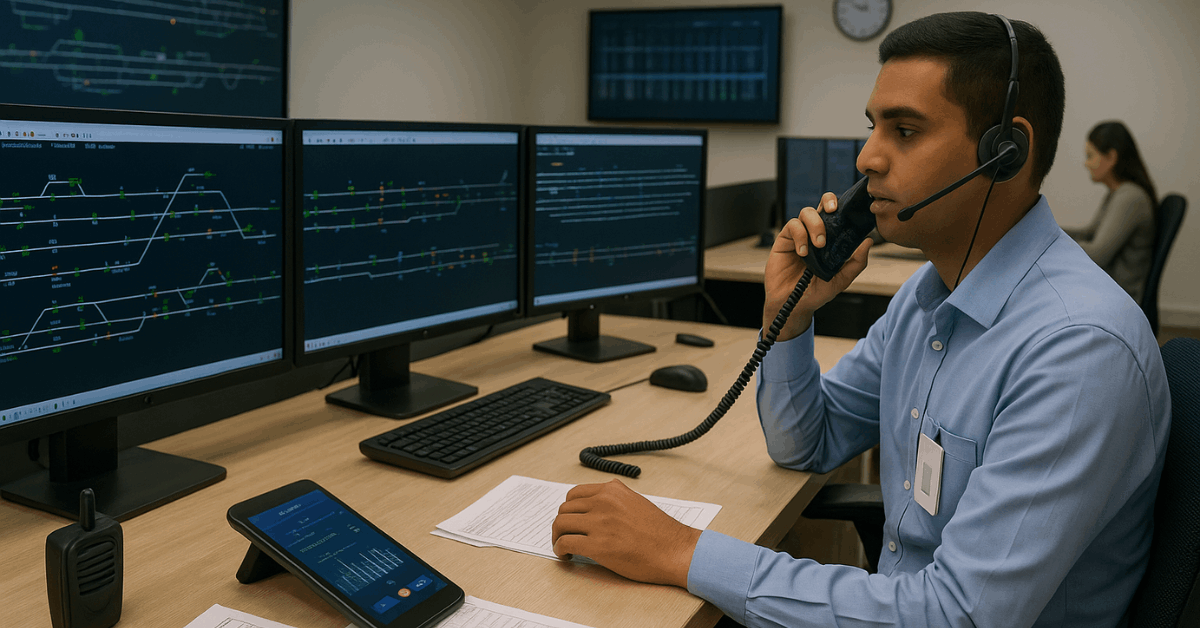
Signaling assistants help control train movements using interlockings, computerized control panels, and local ground equipment.
Many posts are based in control room operations using integrated displays; others support legacy manual signal boxes or lineside equipment.
UK career guidance describes the core scope clearly, operate signals and points, monitor movements, communicate issues, and complete incident reports. Duties include:
- monitoring track occupancy,
- setting routes,
- confirming safe departure,
- logging incidents, and coordinating with drivers,
- maintenance, and dispatch.
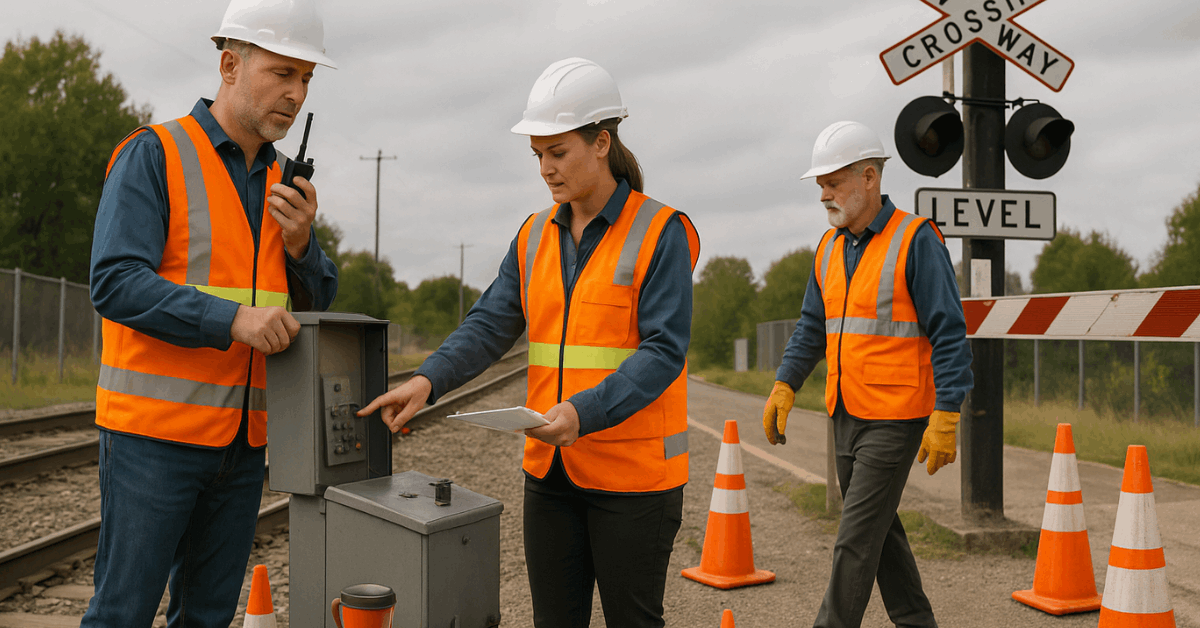
Routine understanding of track maintenance basics, level-crossing protections, and rolling-stock status shortens fault isolation and speeds recovery after an incident.
Collaboration with dispatchers, often called rail traffic controller coordination, keeps the timetable moving during degradations or weather events.
Day-to-Day Responsibilities
High-reliability railways run on disciplined routines. Expect safety-critical communications, precise logging, and repeatable handovers between shifts.
Assistants follow route-setting rules, apply local operating notices, and escalate anomalies fast. Systems vary by country and line, yet the fundamentals below remain consistent.
- Check incident reports, engineering work notices, and equipment alarms before accepting the panel.
- Monitor real-time train graphs and detection blocks; set and release routes per rulebook and permissions.
- Operate points, signals, and crossings; verify indications; initiate safe failure procedures if indications disagree.
- Communicate clearly with drivers, maintainers, and controllers; write concise incident entries and follow escalation trees.
- Complete refresher training on track regulations, new technology, and rule changes per local authority.
Skills and Aptitude
Roles favor calm, detail-driven problem solvers who can hold situational awareness for long periods. UK guidance highlights concentration, equipment operation, teamwork, public-safety knowledge, and competent computer use. Strong habits around safety checklist procedures reduce error rates and support transparent audits.
Physical stamina still helps for on-track verifications or emergency response, even when most hours are at a console. Familiarity with braking curves, detection systems, track circuits or axle counters, and interlocking logic improves decisions under pressure.
Clear spoken language and standard phraseology matter; ambiguous wording risks unsafe outcomes, particularly during degraded operation.
Step-by-Step: How to Become a Railway Signaling Assistant
Modern networks recruit from school leavers, career-changers, and internal station teams. Follow a structured path and anchor each milestone to an authority or rulebook.
- Meet baseline education and screening: Most operators ask for secondary education with passes in maths and language, plus drug/alcohol screening and a medical for safety-critical work.
- Enter through college, apprenticeship, or direct application: Pathways commonly include Level 2–3 rail engineering courses, structured apprenticeships, or direct entry into signalling operations trainee posts.
- Complete initial operations training: In the UK, Network Rail’s Initial Signaller Training typically spans around 13 weeks before location sign-off; similar academy programs exist in other countries.
- Learn the rulebook used on your network: In Canada, proficiency in the Canadian Rail Operating Rules (CROR) is mandatory; operators teach application of authorities, protection rules, and communications. In the United States, the FRA’s Signal, Train Control, and Crossings division oversees compliance for signal employees and grade-crossing systems. In the EU, knowledge of ERTMS principles supports interoperability and safety where deployed.
- Demonstrate on-the-job competence: After classroom phases, assistants must master local panels, interlocking areas, abnormal working, and degraded-mode procedures under mentor supervision, then pass location assessments.
- Advance through experience: Progression includes senior signaller, section or control room operations supervisor, signalling technician/designer (after technical upskilling), or dispatcher roles requiring broader territorial control.
Pay, Hours, and Outlook
Compensation and patterns reflect safety-critical shift coverage. UK career data lists £29,000 to £55,000 as the signaller range, with 42–46 hours typical and coverage on evenings, weekends, and bank holidays. That shift work schedule aligns with round-the-clock rail operations.
For context against the wider economy, UK median gross annual earnings for full-time employees reached £37,430 in April 2024, according to the Office for National Statistics.
Short-term projections can be flat or slightly declining for specific titles as automation and centralization continue. A UK careers database currently signals 0.3% fewer Railway signaller jobs by 2029, while the U.S. Bureau of Labor Statistics projects ~1% growth for railroad workers overall during 2024–2034, with openings driven largely by retirements and transfers.
Where the Role Intersects Other Frontline Jobs
Stations and platforms depend on cohesive teams. Station assistants and customer service staff update indicators, assist passengers, check tickets, and provide dispatch signals under local rules, duties that frequently interface with signalling desks.
Exposure to these activities builds situational awareness helpful for route-setting roles.
Maintenance colleagues, such as signalling technicians and maintainers, install, test, and repair equipment; shadowing or cross-training through signal maintainer training broadens career options for operations staff who enjoy hands-on technical work.
Application Tips That Raise Interview Odds
Hiring managers prioritize a safety mindset, clear communication, and consistent attention to detail.
Strong applications show competency growth and readiness for disciplined procedures. Structured examples from school, service, or prior shift work can demonstrate fit fast.
- Match the advert’s essential criteria, then add concise STAR examples proving calm decision-making under time pressure.
- Show relevant qualifications or modules in rail engineering, electrical principles, or operations; reference any rules familiarity (CROR, roadway worker protection, or ERTMS concepts).
- Highlight teamwork across roles, including rail traffic controller coordination, drivers, and maintenance during incidents or planned works.
- Prepare for assessments that measure concentration, safety awareness, and working with large information sets; rehearse standard call protocols.
- Mention reliable commuting options and flexibility for a rotating shift work schedule that includes nights and holidays.
Training Milestones and Progression Examples
Early tenure focuses on local panel sign-off and building confident abnormal-working routines. Mid-career options include senior signaller, team leader, or transition into technician roles after additional technical coursework.
Some assistants move into dispatch, operations planning, or systems design after mastering complex interlockings and corridor operations.
Professional bodies such as the Institution of Railway Signal Engineers support networking and CPD throughout this progression.
Safety and Rulebook Currency
Rulebooks change as technology and standards evolve.
Teams in Canada must reference the latest CROR publication date during training cycles; U.S. signal employees follow FRA policy and technical manuals; EU routes deploying ERTMS expect continuing competence on system releases.
Keep personal notes current, participate in recurrent checks, and log every briefing to maintain audit-ready records.
What This Job Is and Isn’t
Signaling assistants don’t drive trains; that’s a separate licensing path. Tasks still touch passenger support during incidents, coordination for route diversions, and verification that track and equipment status support safe movement.
Familiarity with inspections and equipment basics helps communicate effectively with maintainers, especially when immediate on-site checks determine whether service can continue safely.
Conclusion
Treat the signalling assistant path as safety-critical work that rewards discipline, teamwork, and adherence to the rulebook.
Validate requirements against regulator sources, then target entry routes that match your education and availability. Build evidence of calm decisions under pressure, rehearse standard phraseology, and prepare for shift assessments.
Commit to continuous training and incident-ready logs to progress into senior, control room, or technical roles. Start now by shortlisting operators, aligning qualifications, and scheduling applications around medicals, screenings, and onboarding windows.